eBPF Routing
Overview
Landscape Router uses eBPF to implement high-performance packet forwarding in the kernel, bypassing the traditional Netfilter path and significantly improving routing performance.
Prerequisites
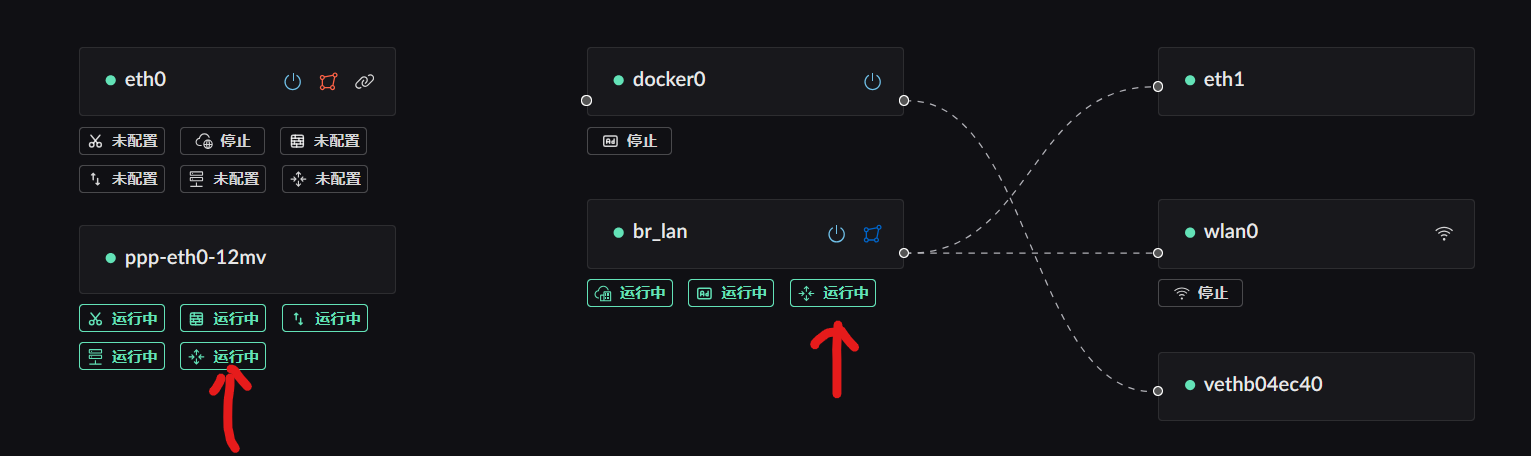
For LAN and WAN to communicate normally, route forwarding must be enabled on the corresponding interfaces.
Where to configure it
Open the interface configuration page, find the relevant WAN and LAN interfaces, and enable the Route Forwarding Service option.
How the Acceleration Works
Netfilter Packet Flow
The diagram below shows the full Netfilter packet flow:
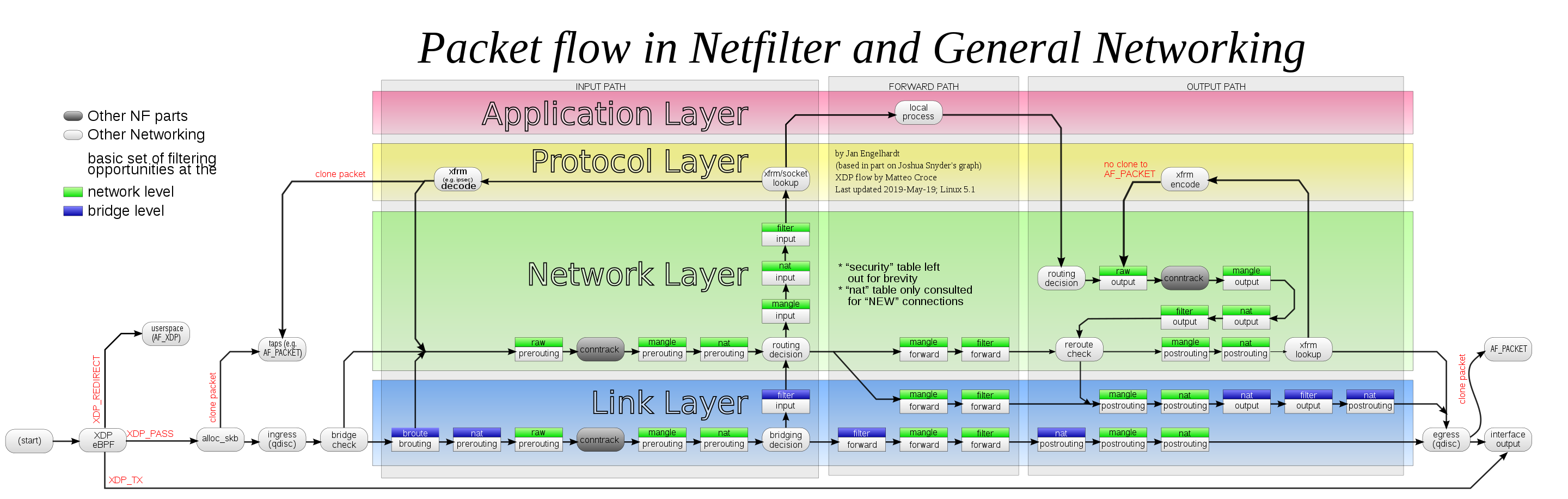
Image source: Wikipedia - Netfilter (CC BY-SA 3.0)
Traditional Routing vs eBPF Routing
Traditional approach (Netfilter / iptables / nftables)
Packets go through multiple stages:
NIC receive -> kernel network stack -> Netfilter hooks -> route decision -> NAT -> forwarding decision -> transmiteBPF accelerated approach
Core advantage
Landscape Router completes forwarding at the Ingress / Egress (qdisc) layer. In other words, it decides the destination before packets enter Netfilter and sends them directly to the target interface.
Acceleration path:
NIC receive -> eBPF processing (TC layer) -> direct forwarding to target NIC
            -> bypass Netfilter
Performance Characteristics
| Feature | Description |
|---|---|
| Forwarding stage | TC (Traffic Control) layer, before Netfilter |
| NAT integration | NAT connection state is not yet fully shared with the eBPF routing path |
| Direct traffic | Nearly no overhead for direct forwarding |
| Container decision | The decision of whether to forward traffic into a Docker container also happens here |
Current limitation
Because NAT connection state has not yet been fully integrated into eBPF routing, the current acceleration result is not the final form. This is already a working 0-to-1 implementation, and it will continue to be optimized.
Performance Tests
Metric Definitions
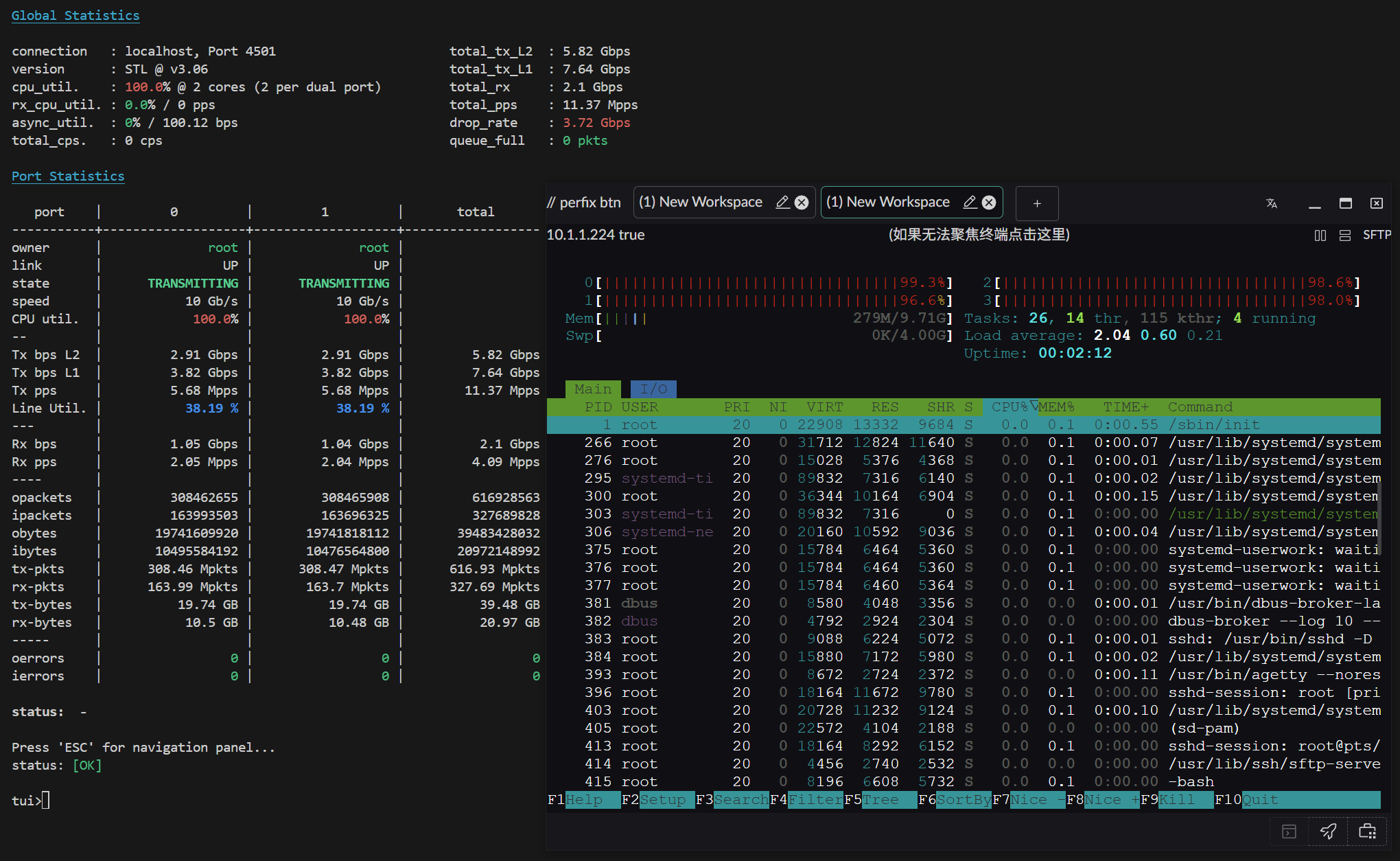
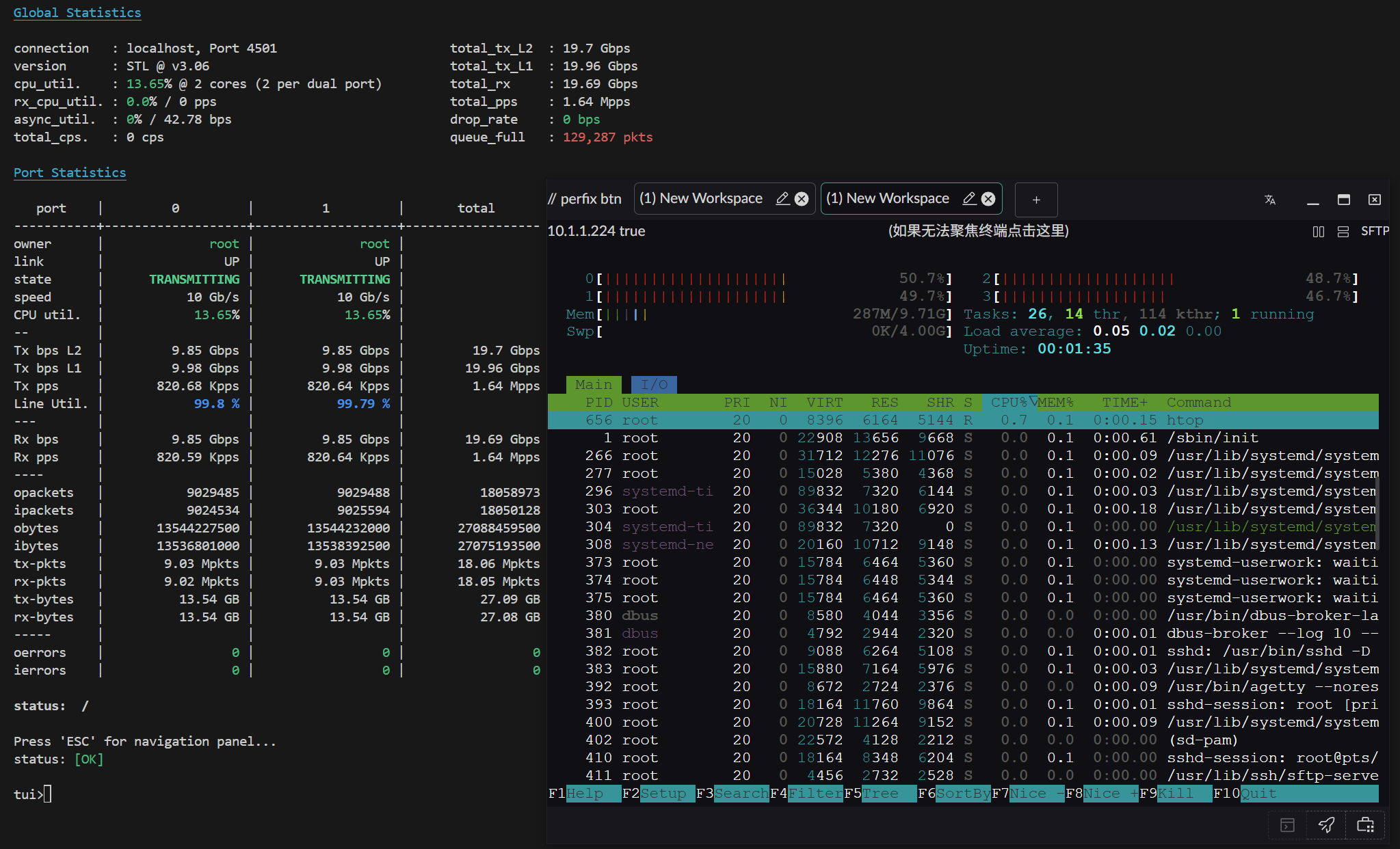
- RX-PPS: received packets per second
- RX-BPS: received bits per second
Test Environment 1
Configuration:
- Operating system: Arch Linux (kernel 6.12.63-1-lts)
- CPU: AMD 2700X (PVE virtual machine with 4 physical cores)
- NIC: Passthrough X520-DA2 (10Gbps)
Results:
Small packet performance (64 bytes)
Large packet performance (1500 bytes)
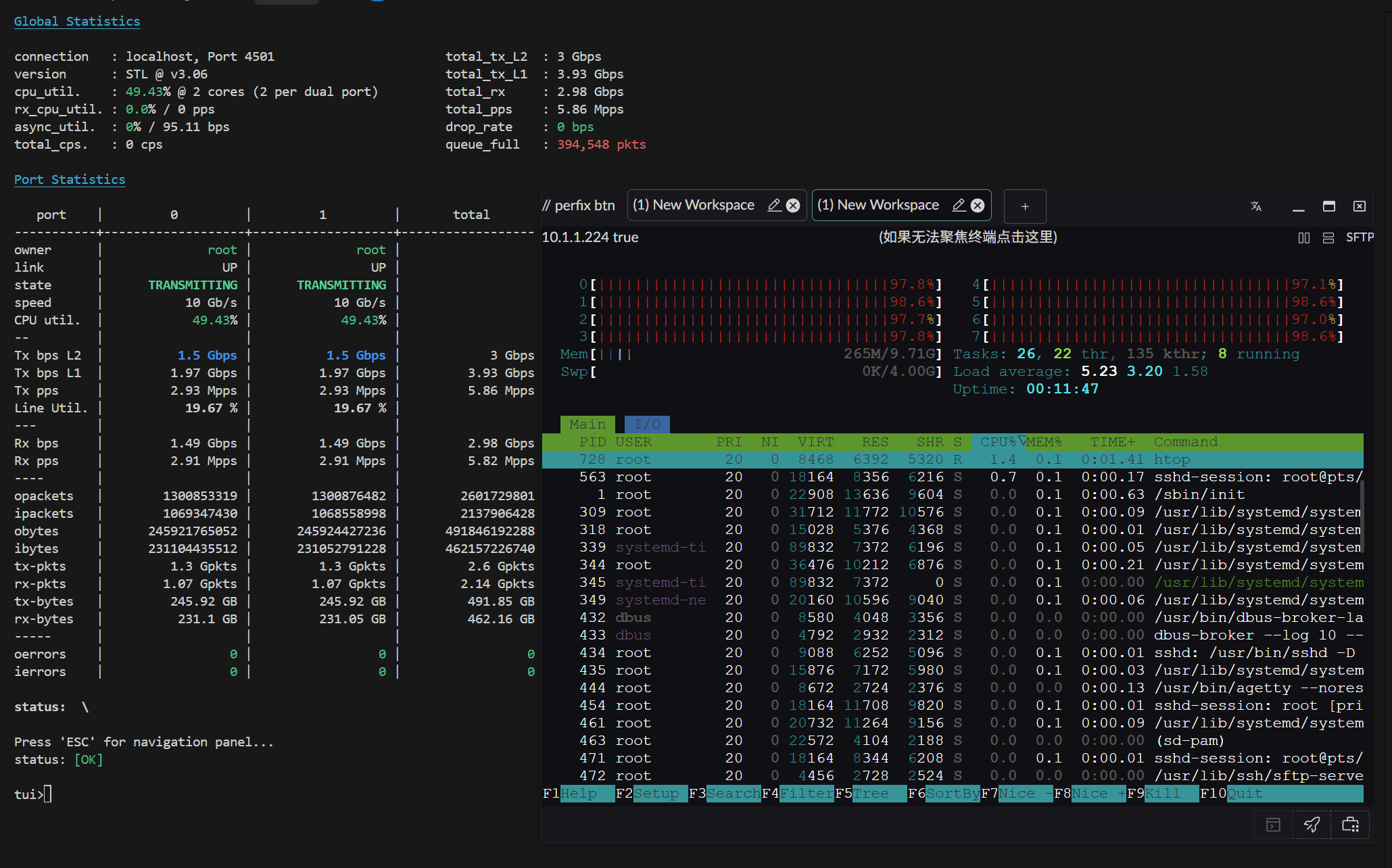
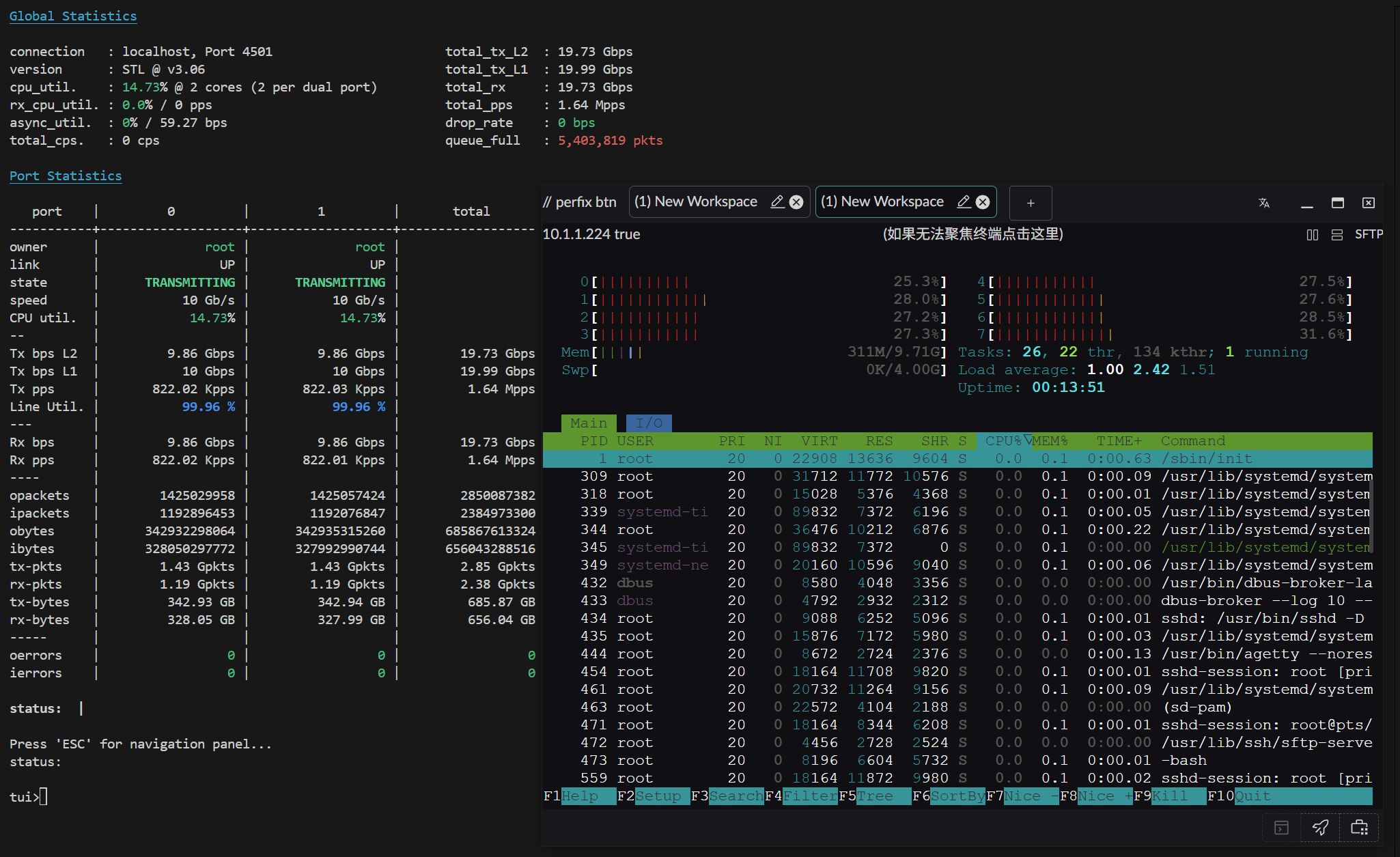
Test Environment 2
Configuration:
- Operating system: Arch Linux (kernel 6.12.63-1-lts)
- CPU: AMD 2700X (PVE virtual machine with 4 physical cores / 8 threads)
- NIC: Passthrough X520-DA2 (10Gbps)
Results:
Small packet performance (64 bytes)
Large packet performance (1500 bytes)
Related Documents
- Traffic Shaping - Learn how to configure traffic forwarding rules
- Basic Operations - XPS/RPS tuning for network interfaces
- Firewall Settings - Security policies that work alongside eBPF routing